Best Yoga Poses for Back Pain: 15 Gentle Stretches to Relieve Pain Naturally
15 Best Yoga Poses for Back Pain Relief (Beginner-Friendly Guide)
Discover the best yoga poses for back pain that improve flexibility, reduce stiffness, and strengthen your spine naturally. Start feeling better today!
If you’ve searched for the best yoga poses for back pain, chances are you’re tired of waking up with stiffness, struggling to sit comfortably at work, or dealing with persistent aches that seem to follow you everywhere.
The good news? 🌿
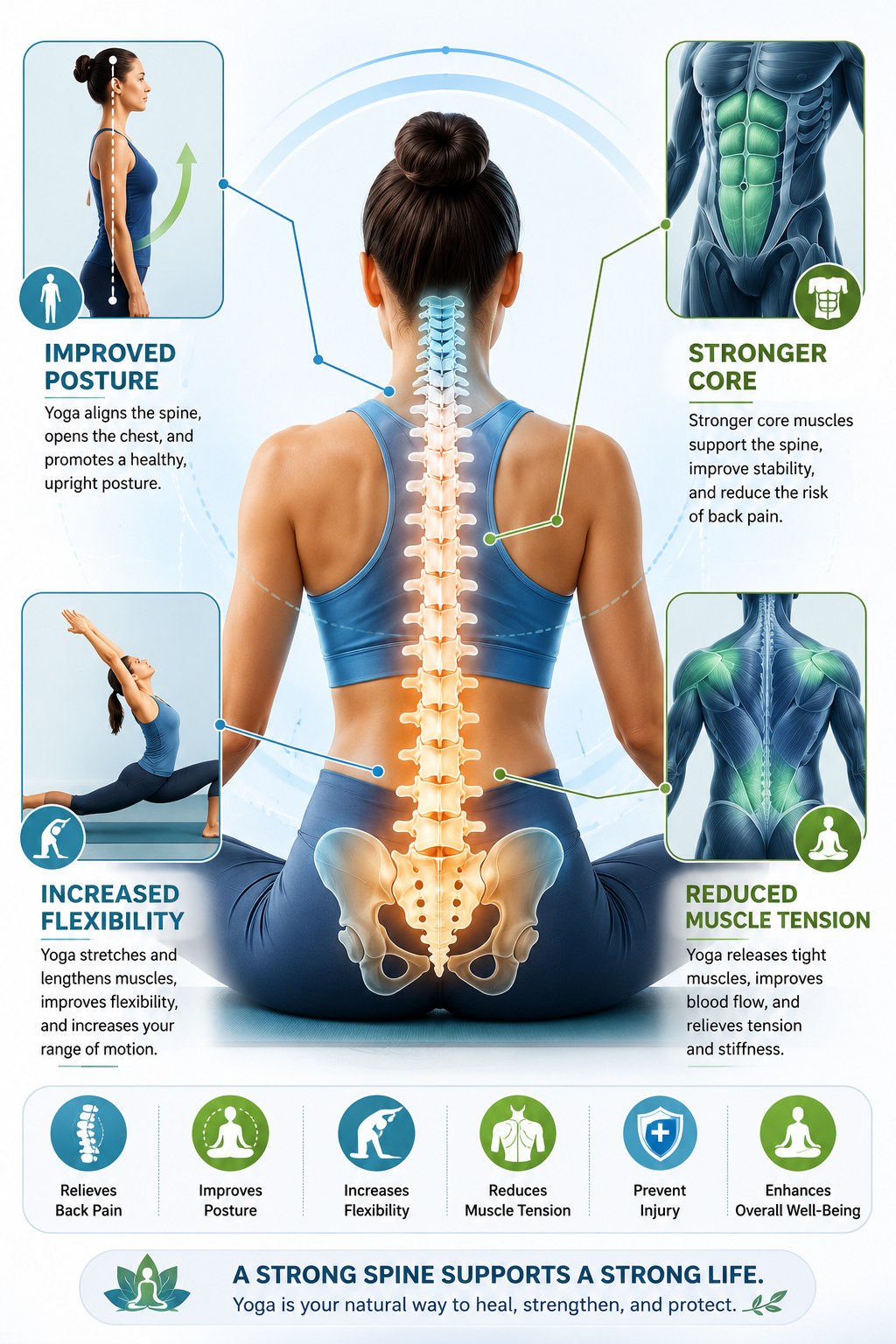
Yoga isn’t just about flexibility—it can help improve posture, strengthen your core, reduce muscle tension, and increase spinal mobility when practiced correctly. In this guide, you’ll discover beginner-friendly poses, practical tips, and common mistakes to avoid so you can move with greater comfort and confidence.
Introduction
Does your back hurt after sitting at a desk all day? 😣 Maybe lifting groceries feels harder than it should, or you wake up every morning with a stiff lower back. You’re not alone.
Back pain is one of the most common health complaints worldwide, affecting people of all ages. Whether it’s caused by poor posture, long hours of sitting, weak core muscles, or everyday stress, chronic discomfort can make even simple tasks feel exhausting.
The encouraging news is that gentle yoga may help. When practiced with proper form, yoga can stretch tight muscles, strengthen the muscles that support your spine, improve posture, and encourage relaxation—all of which can contribute to better back health over time.
In this comprehensive guide, you’ll learn the best yoga poses for back pain, why they work, how to perform them safely, and how to build a simple routine you can practice at home.
Let’s begin.
Why Does Back Pain Happen?
Before treating back pain, it’s important to understand what might be causing it.
Some of the most common reasons include:
- Poor posture while sitting or standing
- Weak abdominal and core muscles
- Tight hips and hamstrings
- Muscle strain
- Lack of movement
- Excess body weight
- Stress-related muscle tension
- Age-related wear and tear
In some cases, back pain may also be related to conditions such as herniated discs, spinal stenosis, arthritis, or sciatica. If your pain is severe, follows an injury, or is accompanied by numbness, weakness, fever, or loss of bladder or bowel control, seek medical evaluation before beginning an exercise program.
How Yoga Helps Relieve Back Pain
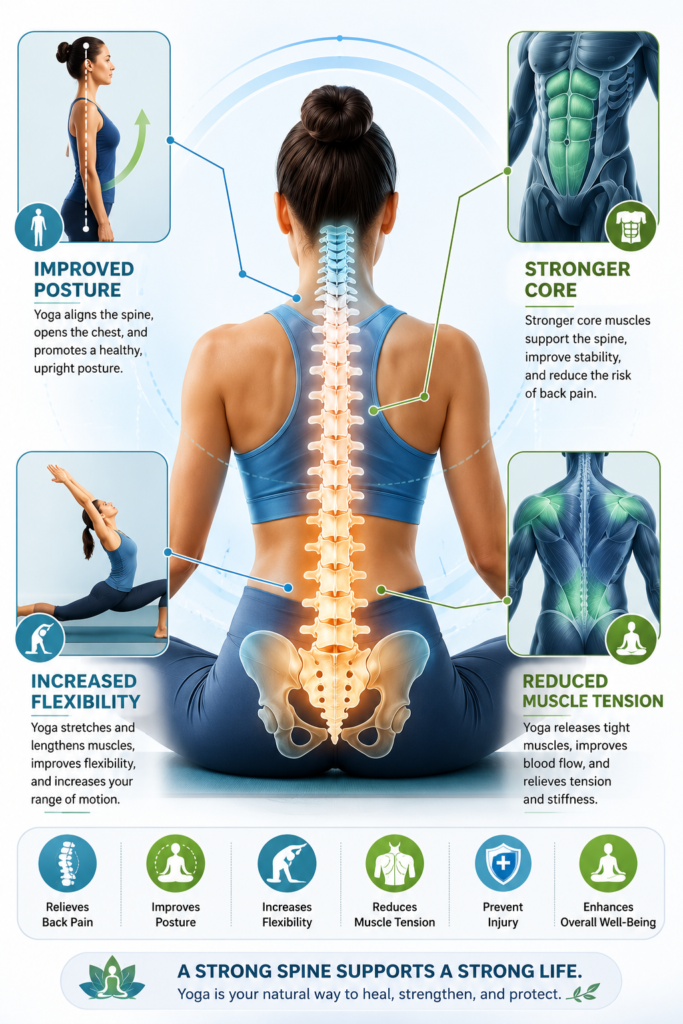
Yoga addresses many of the factors that contribute to back pain rather than focusing on just one symptom.
Benefits include:
✅ Improves spinal flexibility
Gentle movements help maintain healthy spinal mobility and reduce stiffness.
✅ Strengthens supporting muscles
Yoga builds strength in your:
- Core
- Lower back
- Glutes
- Hips
- Shoulders
A stronger support system reduces stress on the spine.
✅ Improves posture
Many people unknowingly spend hours hunched over laptops or phones.
Yoga promotes better body awareness, helping you stand and sit with improved alignment.
✅ Reduces muscle tightness
Stretching muscles like the hamstrings, hip flexors, and lower back can reduce pulling forces on the spine.
✅ Reduces stress
Stress often leads to muscle tension, especially in the neck, shoulders, and lower back.
Breathing exercises and mindful movement help calm the nervous system, which may ease pain associated with muscle tension.
Before You Start
Follow these safety tips:
- Move slowly.
- Never force a stretch.
- Stop if you feel sharp pain.
- Focus on breathing.
- Use yoga blocks or cushions if needed.
- Practice on a non-slip yoga mat.
- Stay hydrated.
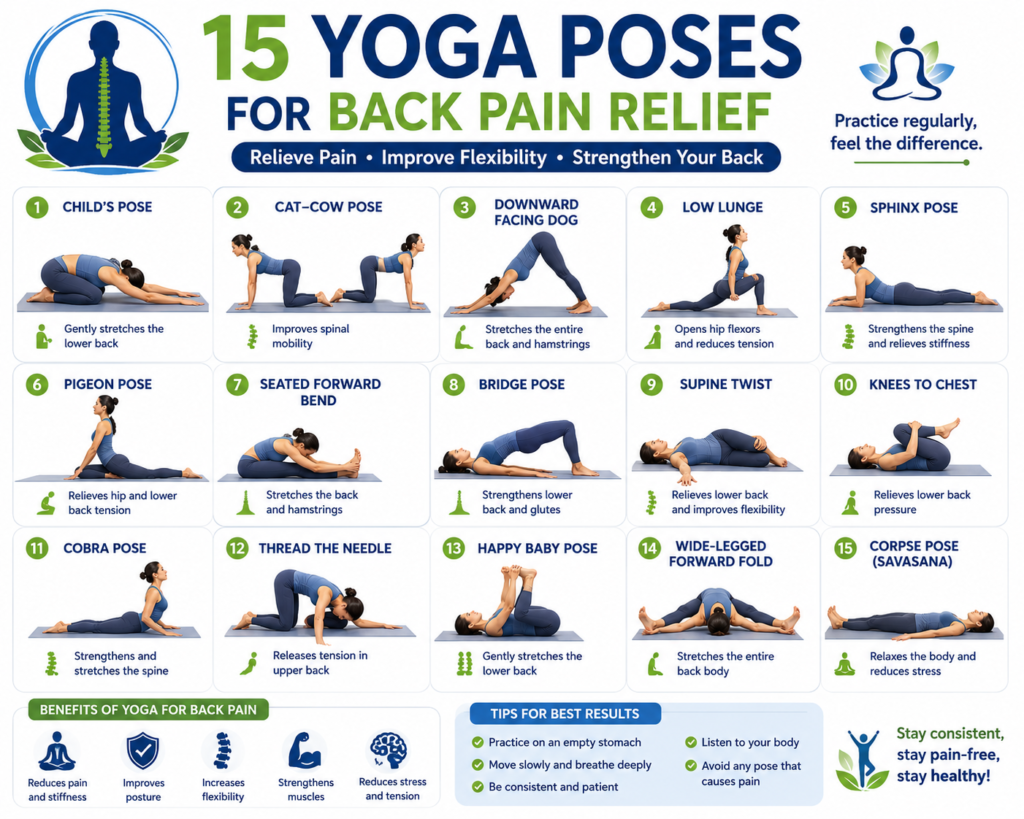
15 Best Yoga Poses for Back Pain
1. Child’s Pose (Balasana)
Why it helps
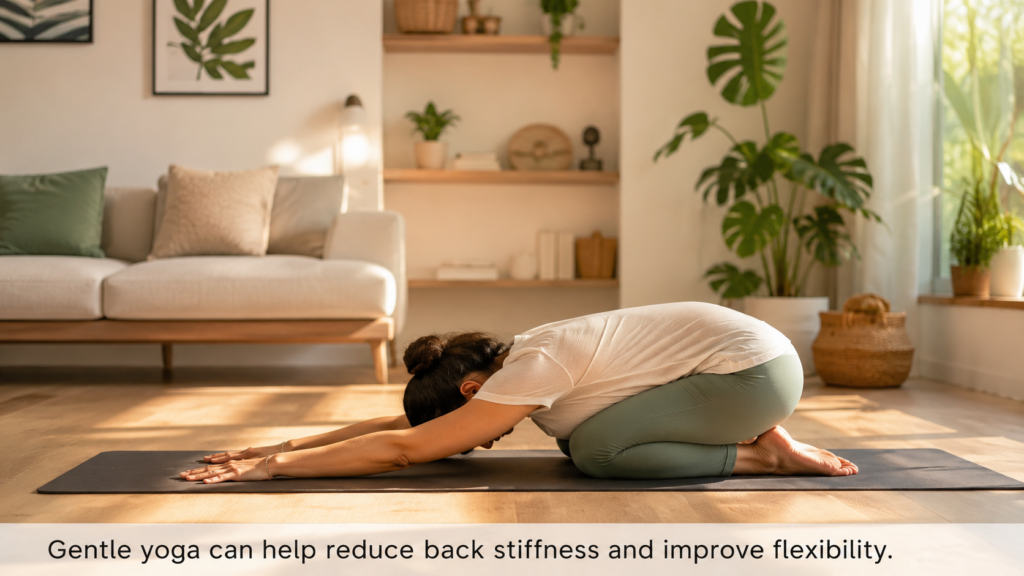
Child’s Pose is one of the most relaxing yoga positions for relieving tension in the lower back, hips, and shoulders. It gently lengthens the spine while allowing the muscles to relax.
How to do it
- Kneel on the floor.
- Sit back on your heels.
- Stretch your arms forward.
- Rest your forehead on the mat.
- Breathe deeply for 30–60 seconds.
Benefits
- Relieves lower back tension
- Gently stretches hips
- Reduces stress
- Improves flexibility
Beginner Tip: Place a pillow beneath your chest if reaching the floor feels uncomfortable.
2. Cat-Cow Pose (Marjaryasana-Bitilasana)
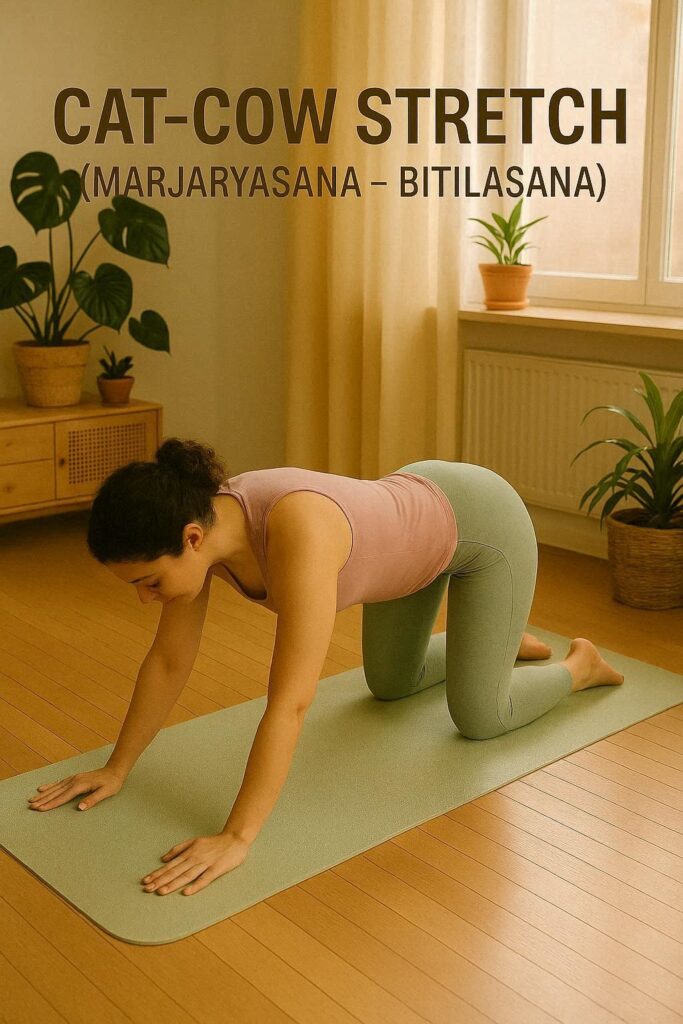
One of the best mobility exercises for the spine.
Steps
- Begin on hands and knees.
- Inhale while arching your back and lifting your chest (Cow Pose).
- Exhale while rounding your spine and tucking your chin (Cat Pose).
- Continue for 8–12 slow repetitions.
Benefits
- Improves spinal mobility
- Warms up the back
- Reduces stiffness
- Enhances posture
💡 Pro Tip: Match each movement with your breathing rather than rushing through the exercise.
3. Downward-Facing Dog (Adho Mukha Svanasana)
This classic yoga pose stretches the entire back body while strengthening the shoulders and core.
Steps
- Start on all fours.
- Lift your hips toward the ceiling.
- Straighten your legs as much as comfortable.
- Press your hands firmly into the floor.
- Keep your neck relaxed.
Hold for 20–40 seconds.
Benefits
- Stretches hamstrings
- Lengthens the spine
- Strengthens shoulders
- Improves circulation
4. Cobra Pose (Bhujangasana)
Cobra Pose is especially helpful for people who spend long hours sitting.
How to perform
- Lie on your stomach.
- Place your palms under your shoulders.
- Press gently into your hands.
- Lift your chest without straining your lower back.
- Keep your elbows slightly bent.
Hold for 20 seconds.
Benefits
- Strengthens back muscles
- Opens the chest
- Improves posture
- Counteracts prolonged sitting
⚠️ Avoid forcing a high lift if it causes discomfort.
5. Sphinx Pose
A gentler alternative to Cobra Pose.
Sphinx Pose provides a mild backbend while supporting the lower spine.
Steps
- Lie on your stomach.
- Rest on your forearms.
- Keep elbows beneath shoulders.
- Relax your hips.
- Hold for 30–60 seconds.
Benefits
- Gentle spinal extension
- Improves posture
- Strengthens lower back
- Suitable for beginners
6. Bridge Pose (Setu Bandhasana)
Bridge Pose strengthens the muscles that support your spine while stretching the front of the body.
Steps
- Lie on your back.
- Bend your knees.
- Keep feet hip-width apart.
- Lift your hips slowly.
- Press through your heels.
Hold for 20–30 seconds.
Benefits
- Strengthens glutes
- Activates core muscles
- Supports the lumbar spine
- Improves hip mobility
7. Supine Spinal Twist
One of the most satisfying stretches after a long day of sitting.
Steps
- Lie flat on your back.
- Bring one knee toward your chest.
- Gently guide it across your body.
- Extend the opposite arm.
- Look toward the extended hand.
Hold each side for 30 seconds.
Benefits
- Releases spinal tension
- Improves flexibility
- Stretches hips
- Encourages relaxation
8. Happy Baby Pose (Ananda Balasana)
Don’t let the playful name fool you—this pose is excellent for relieving tightness in the lower back and hips.
How to do it
- Lie on your back.
- Bring your knees toward your chest.
- Hold the outsides of your feet or ankles.
- Gently pull your knees toward your armpits.
- Rock side to side if comfortable.
Benefits
- Relaxes the lower back
- Opens the hips
- Reduces stiffness
- Releases tension after prolonged sitting
9. Knees-to-Chest Pose (Apanasana)
This gentle stretch helps release tension in the lower back and may ease stiffness after prolonged sitting or standing.
How to do it
- Lie on your back.
- Bend both knees toward your chest.
- Wrap your arms around your legs.
- Gently pull your knees closer.
- Hold for 30–60 seconds while breathing deeply.
Benefits
- Relieves lower back tightness
- Stretches the lumbar muscles
- Massages abdominal organs
- Encourages relaxation
10. Seated Forward Fold (Paschimottanasana)
This pose stretches the entire back of the body, especially the hamstrings, which often contribute to lower back discomfort when tight.
Steps
- Sit with your legs extended.
- Keep your back long.
- Hinge at the hips.
- Reach toward your feet.
- Only go as far as comfortable.
Benefits
- Improves hamstring flexibility
- Reduces lower back tension
- Calms the nervous system
💡 Tip: Bend your knees slightly if your hamstrings feel tight.
11. Thread the Needle Pose
A wonderful stretch for relieving upper back, shoulder, and neck tension.
Steps
- Start on hands and knees.
- Slide one arm underneath the other.
- Rest your shoulder and head on the floor.
- Hold for 30 seconds.
- Repeat on the opposite side.
Benefits
- Releases shoulder tightness
- Improves thoracic spine mobility
- Relieves upper back stiffness
12. Reclining Pigeon Pose (Figure Four Stretch)
Tight hips can increase strain on the lower back. This pose targets the glutes and piriformis muscles.
Steps
- Lie on your back.
- Cross one ankle over the opposite knee.
- Lift the supporting leg.
- Hold behind the thigh.
- Keep your shoulders relaxed.
Benefits
- Opens the hips
- Reduces piriformis tightness
- May help ease sciatica-related discomfort
13. Triangle Pose (Trikonasana)
A standing pose that improves balance, flexibility, and side-body mobility.
Steps
- Stand with feet wide apart.
- Turn one foot outward.
- Reach forward.
- Lower one hand to your shin or a yoga block.
- Extend the opposite arm upward.
Benefits
- Strengthens the legs
- Improves posture
- Stretches the spine and hips
14. Locust Pose (Salabhasana)
This strengthening pose targets the muscles that support the spine.
Steps
- Lie face down.
- Lift your chest, arms, and legs slightly.
- Keep your neck neutral.
- Hold for 10–20 seconds.
Benefits
- Strengthens the lower back
- Builds core stability
- Improves spinal endurance
15. Legs-Up-the-Wall Pose (Viparita Karani)
A restorative pose that’s ideal for ending your practice.
Steps
- Sit beside a wall.
- Swing your legs up the wall.
- Lie back comfortably.
- Relax your arms.
- Stay for 5–10 minutes.
Benefits
- Relaxes the lower back
- Improves circulation
- Reduces fatigue
- Encourages deep relaxation
A 15-Minute Beginner Yoga Routine for Back Pain
Try this simple sequence once a day:
| Pose | Duration |
|---|---|
| Child’s Pose | 1 minute |
| Cat-Cow | 2 minutes |
| Sphinx Pose | 1 minute |
| Cobra Pose | 1 minute |
| Bridge Pose | 1 minute |
| Knees-to-Chest | 1 minute |
| Supine Spinal Twist | 2 minutes |
| Happy Baby | 2 minutes |
| Legs-Up-the-Wall | 4 minutes |
Total Time: ~15 minutes
Common Mistakes to Avoid
❌ Pushing into pain instead of stretching gently
❌ Holding your breath during poses
❌ Moving too quickly
❌ Skipping the warm-up
❌ Ignoring proper alignment
❌ Comparing yourself to others
❌ Practicing on an unstable surface
Pros and Cons of Yoga for Back Pain
| Pros | Cons |
|---|---|
| Improves flexibility | Results take time |
| Strengthens core muscles | Incorrect form can worsen pain |
| Reduces stress | Not suitable for every medical condition |
| Improves posture | May require modifications |
| Can be done at home | Severe pain requires medical evaluation |
Myth vs. Fact
| Myth | Fact |
|---|---|
| Yoga is only for flexible people. | Yoga can be adapted for nearly all fitness levels. |
| Back pain means you should avoid movement. | Gentle, appropriate movement often supports recovery. |
| More stretching is always better. | Overstretching can increase discomfort. |
| Yoga cures every type of back pain. | It can help many people, but treatment depends on the underlying cause. |
Expert Tips for Safer Practice
- Warm up for 3–5 minutes before deeper stretches.
- Coordinate movement with slow, steady breathing.
- Use yoga blocks, bolsters, or folded blankets for support.
- Practice consistently—short daily sessions are often more beneficial than occasional long sessions.
- If pain radiates down your leg or is accompanied by numbness or weakness, consult a healthcare professional before continuing.
Key Takeaways
- Yoga can improve flexibility, posture, and core strength.
- Gentle, controlled movements are more effective than forcing deep stretches.
- Consistency is more important than intensity.
- Listen to your body and modify poses when needed.
- Seek medical advice if symptoms are severe or persistent.
Frequently Asked Questions
1. Which yoga pose is best for lower back pain?
Child’s Pose is often recommended because it gently stretches the lower back, hips, and spine while promoting relaxation.
2. Can beginners do yoga for back pain?
Yes. Many poses, such as Child’s Pose, Cat-Cow, and Sphinx Pose, are beginner-friendly. Start slowly and modify poses as needed.
3. How often should I practice yoga for back pain?
A short routine of 10–20 minutes, three to five times per week—or even daily if comfortable—can help improve flexibility and strength over time.
4. Can yoga make back pain worse?
It can if poses are performed with poor technique, excessive force, or despite an underlying condition that requires medical care. Stop if you experience sharp pain and seek professional advice if symptoms persist.
5. Is walking or yoga better for back pain?
Both can be beneficial. Walking supports general fitness and circulation, while yoga adds flexibility, posture, and core-strengthening benefits.
6. Which yoga poses should I avoid if I have severe back pain?
Deep backbends, forceful twists, and advanced inversions may not be appropriate without guidance. A healthcare professional or qualified yoga instructor can help determine what is safe for your situation.
7. How long does it take for yoga to help back pain?
Many people notice improvements in stiffness and mobility within a few weeks of consistent practice, though results vary depending on the cause of the pain and individual factors.
Conclusion
Living with back pain can be frustrating, but small, consistent habits often make a meaningful difference. The best yoga poses for back pain focus on improving flexibility, strengthening the muscles that support your spine, encouraging better posture, and helping you move with greater confidence.
Remember that progress doesn’t require perfect poses. Listen to your body, practice regularly, and prioritize comfort over intensity. If your pain is severe, persistent, or associated with concerning symptoms, consult a qualified healthcare professional before beginning a new exercise routine.
Ready to Take the First Step? 🌿
Start with just 15 minutes today. Choose three or four gentle poses from this guide and build a routine that fits your lifestyle.
If you found this guide helpful:
- 💬 Leave a comment sharing your experience.
- 📤 Share it with someone who struggles with back pain.
- 📩 Subscribe to receive more evidence-informed yoga, fitness, and wellness tips.
- 🧘 Explore our other yoga and stretching guides to support a healthier, more active life.